
Metered Pricing
Metered Pricing is a pricing model where you charge your customers based on the usage of your application. There are a few different pricing models unique to Usage Based Billing:- Unit Pricing
- Volume Pricing
- Graduated Pricing
Unit Pricing
Unit pricing is a simple pricing model where you charge a fixed amount for each unit of usage. For example:
This means that every unit of
prompt-tokens consumed by a customer will be charged at $0.10 and every unit of completion-tokens will be charged at $0.18.
It’s a linear pricing model, where the price per unit is fixed.
Volume Pricing
Volume pricing sets the rate from the total usage over the period, and that rate applies to every unit. Crossing a threshold lowers the price on all of it.Graduated Pricing
Graduated pricing charges each range at its own rate. The total is the sum across ranges.Defining tiers
Volume and graduated take the same tiers. Define one by an upper bound and a rate. The bound is inclusive, and each tier starts where the previous one ended. The last tier is always unbounded, since usage has no ceiling. A cap still limits what the customer pays. Example with tiers at up to 1,000: $0.10 per unit, and beyond: $0.08 per unit:- Volume: 1,400 units = 1,400 × $0.08 = $112. Every unit gets the lower rate.
- Graduated: 1,400 units = 1,000 × $0.10 + 400 × $0.08 = $132. Each range keeps its own rate.
Invoicing Customers for Usage
Our Usage Based Billing infrastructure is built to work with Subscription products out of the box.Add a metered price to your product
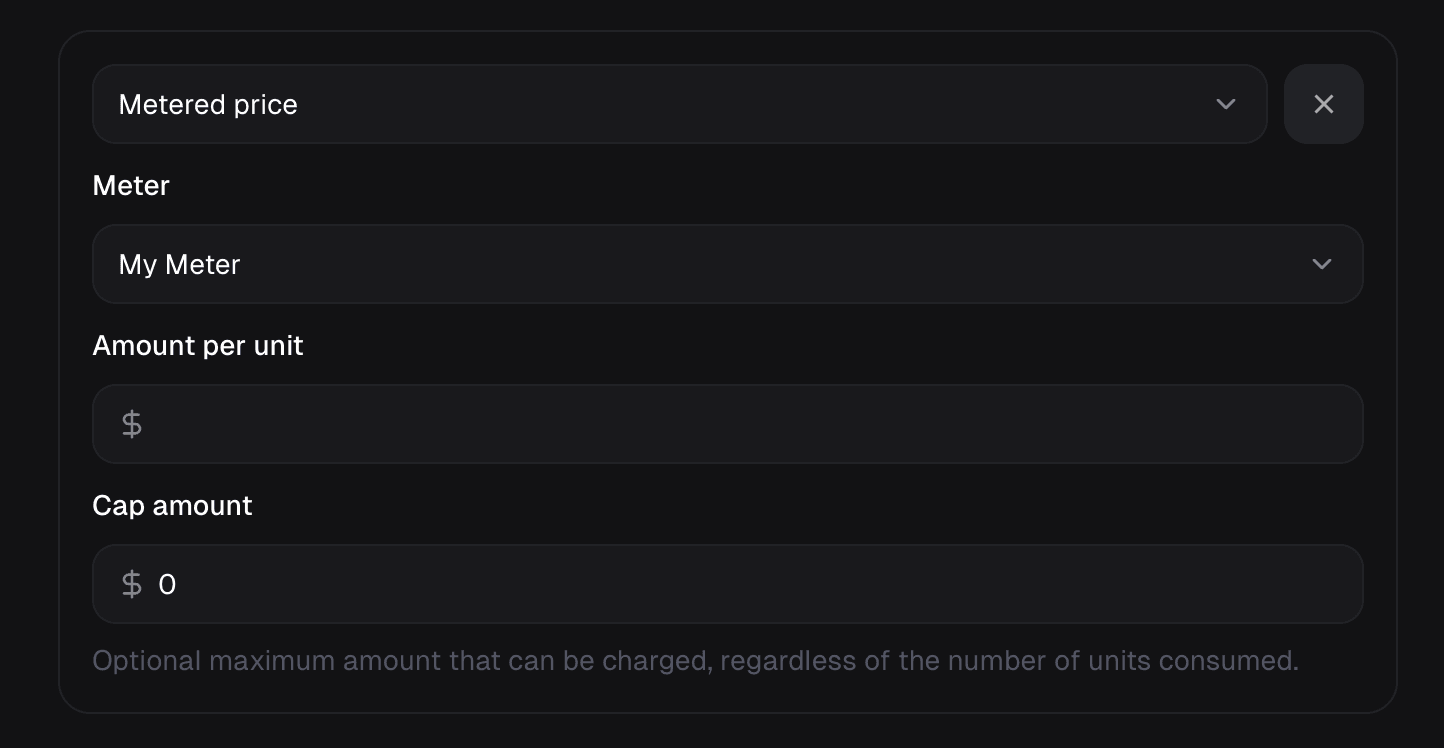
To charge your customers for usage, you need to add a metered price to your product. You’ll need to select the Meter and the Pricing model. A flat price per unit takes a single amount per unit; volume and graduated take a list of tiers.The price is always entered as the cost per single unit. How it is
displayed to customers — for example as
$20 / 1M tokens — is controlled by
the Unit setting on the meter.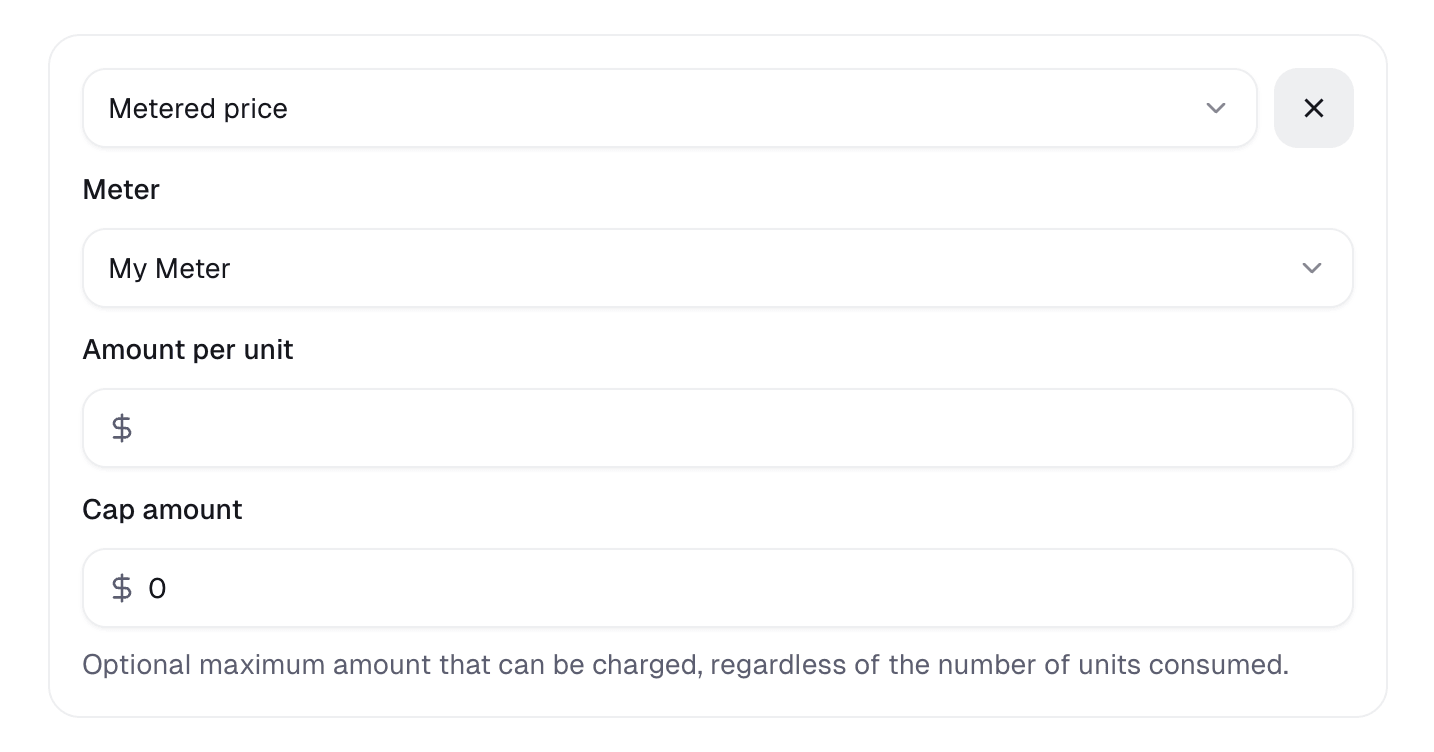
When usage is invoiced
By default, usage follows the subscription’s billing period. On a monthly subscription, usage is aggregated over the month and invoiced at renewal with the rest of the subscription. On a yearly subscription, it’s aggregated over the year and invoiced at the yearly renewal. To invoice usage more often than the subscription renews, for example monthly on a yearly plan, set a meter cycle.Meter cycle
A meter cycle lets metered usage run on its own cadence, independent of the billing interval. It’s set on the product withmeter_interval and meter_interval_count, or with the Separate meter cycle toggle in the product’s pricing section.
The common case is a yearly plan with monthly usage: the customer pays the base price once a year, while overage is invoiced and credits are granted every month.
At the end of each meter period, Polar:
- Invoices the period’s usage as a separate order.
- Resets the customer’s meters.
- Grants the Credits benefit again, applying rollover if it’s enabled.
Alignment with the billing interval
The meter cycle must divide the billing interval evenly, so both cycles line up again at every renewal. The meter cycle starts on the same anchor day as the subscription.
For example, a yearly plan accepts a meter cycle of 1, 2, 3, 4, 6 or 12 months, but not 5 months or 1 week. Weeks don’t fit evenly into months, so weekly meter cycles aren’t available on monthly or yearly plans.
At renewal and other boundaries
- Renewal: the last meter period of a billing period is invoiced in the regular renewal order, together with the base price. No separate
subscription_meter_cycleorder is created, and the meter cycle restarts from the new billing period. - Trials: the meter cycle starts when the trial converts to a paid subscription.
- Plan change: usage accrued so far is invoiced right away on the previous product’s prices, before the switch takes effect.
- Immediate cancellation: usage up to the cancellation is invoiced right away. A cancellation at the end of the period invoices the final usage at the end of that period, as usual.
Discounts
A percentage discount applies to every meter cycle order. A fixed-amount discount doesn’t. It still applies to the renewal order.Failed payments
A failed meter cycle order is retried on the same schedule as failed subscription payments: after 2, 7, 14 and 21 days. It never affects the subscription itself: the subscription staysactive, keeps its benefits, and isn’t revoked. If every retry fails, the order is voided.
If the subscription itself becomes past_due because its renewal payment failed, the meter cycle is paused: no usage is invoiced, meters aren’t reset and no credits are granted. Usage keeps being recorded. When the subscription recovers, the accrued usage is invoiced in one order, meters are reset and credits are granted again.
Customer emails
Each meter cycle order sends the customer a Your usage invoice email with a link to the customer portal. It’s controlled by the same setting as subscription renewal emails, so disabling renewal emails disables these too.Webhooks
Each meter cycle order emitsorder.created and order.paid like any other order. Check billing_reason to tell them apart from renewals. Meter cycles don’t emit subscription.cycled, which only fires at renewal.
Usage Charges and Subscription Cancellation
When a subscription is canceled, it generally remains active until the end of the current billing period (known as the grace period). During this grace period, all accumulated usage-based charges continue to be tracked. A final invoice will be issued at the end of that period to cover the consumed usage, even if the subscription will not be renewed. This ensures no pending usage charges are lost.Customer Portal
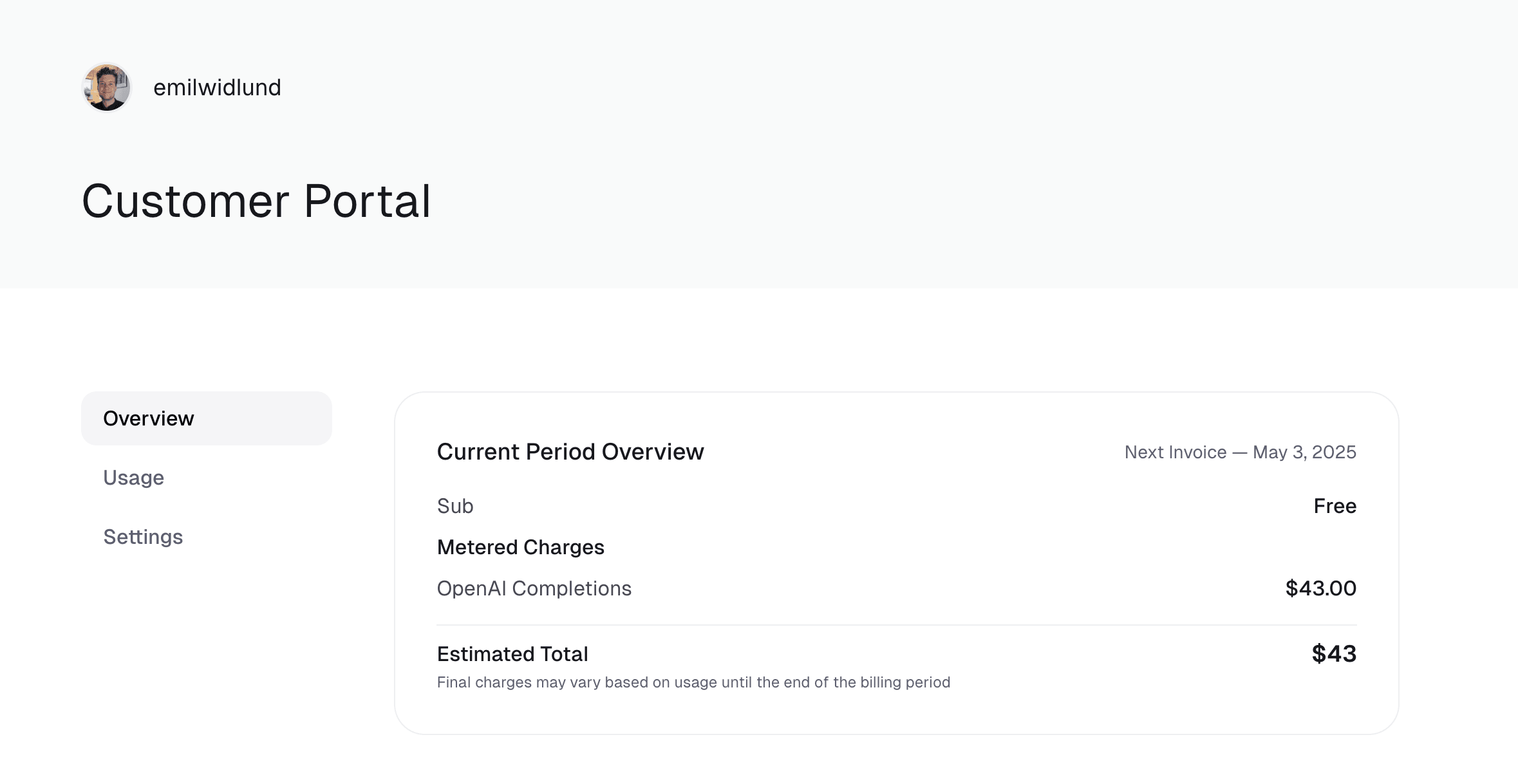
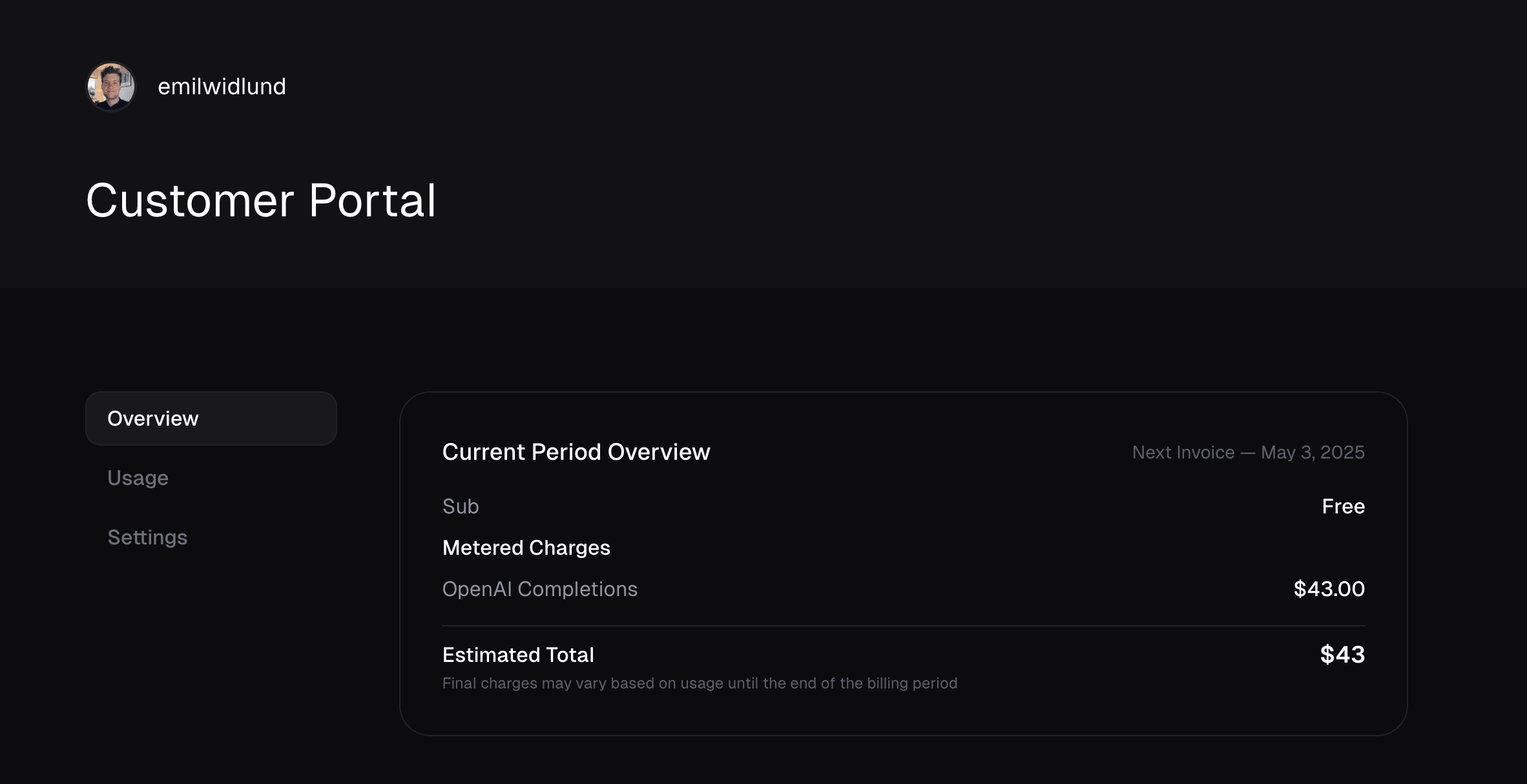
Customers can view their estimated charges for each meter in the Customer Portal.